Tamriel
Where empires crumble, dragons rise, and mortals shape the fate of the world.
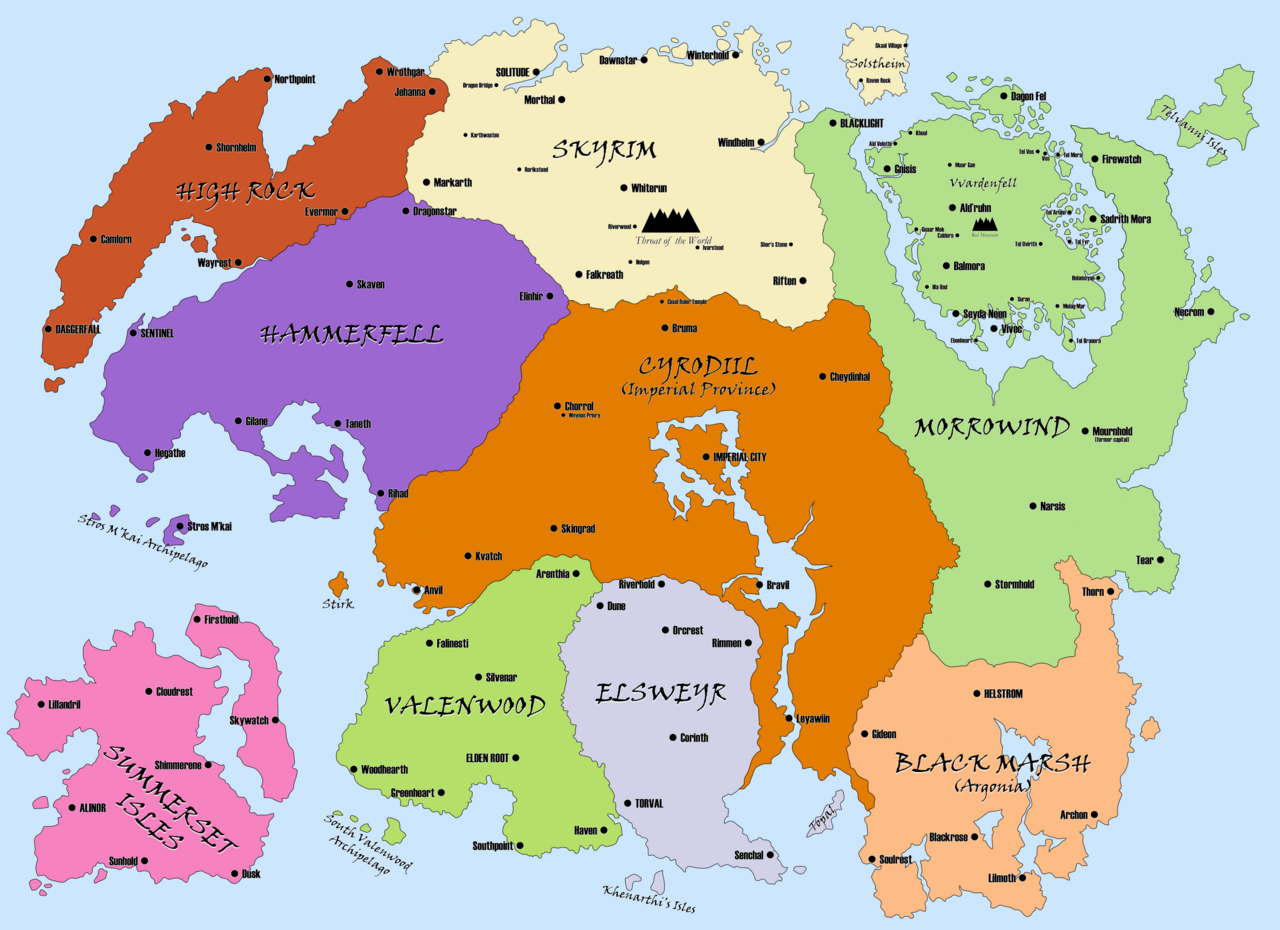
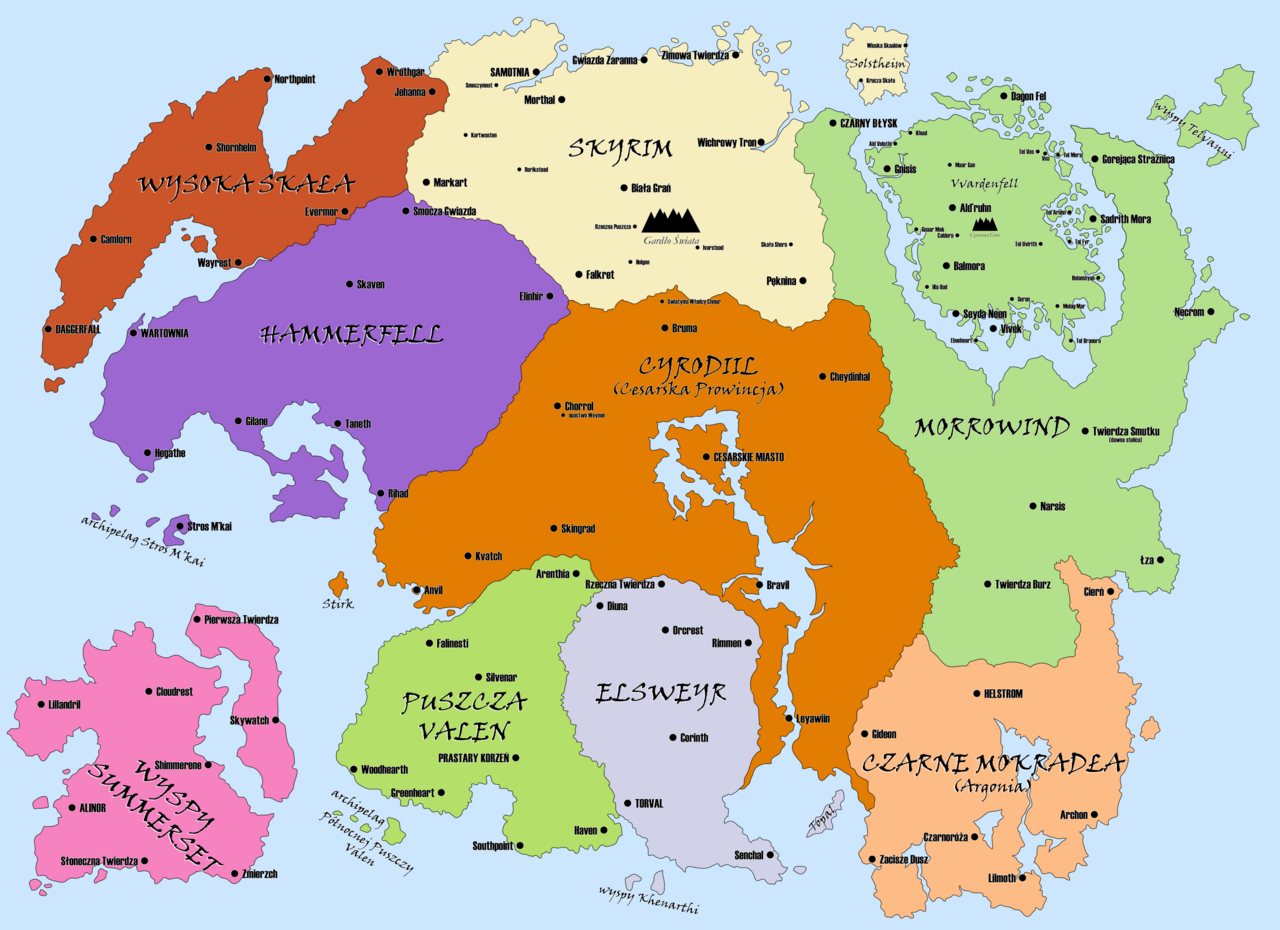
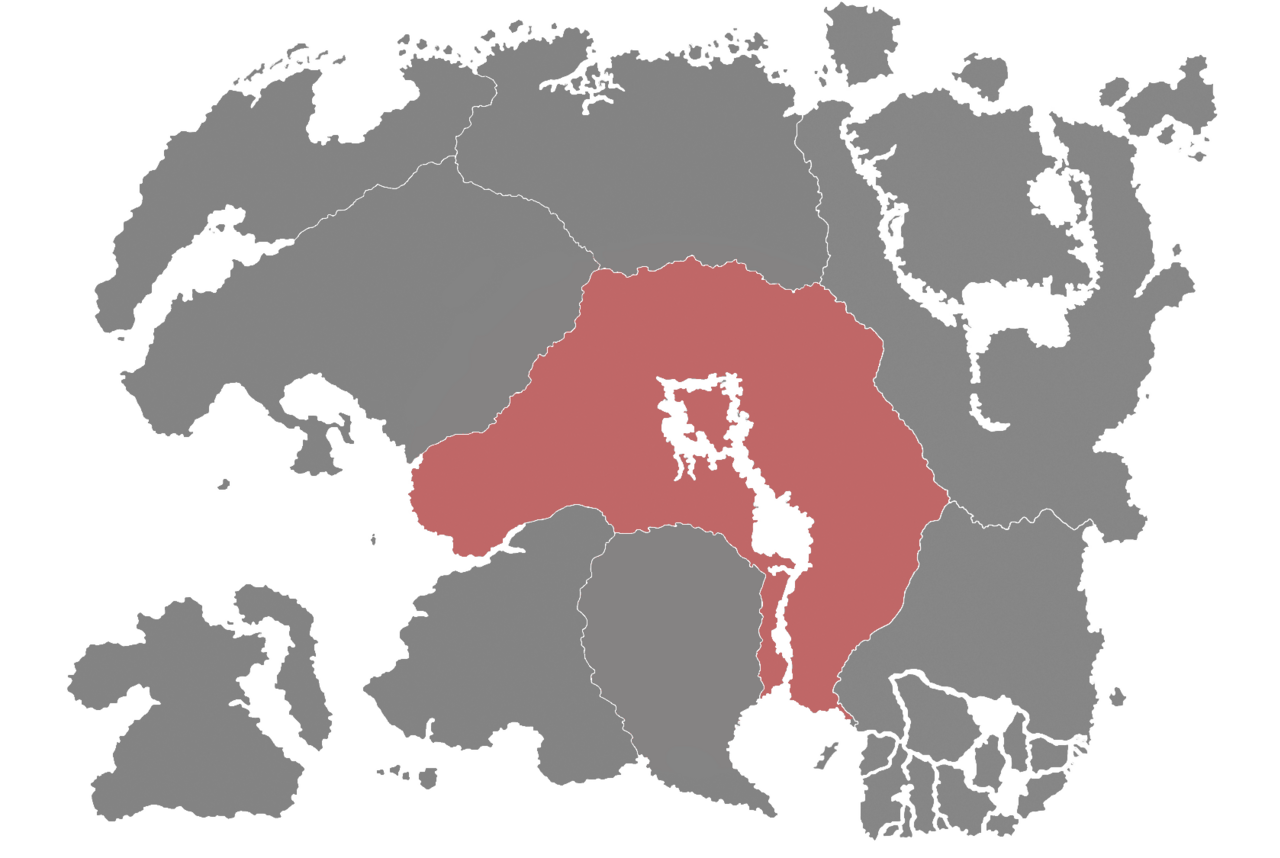
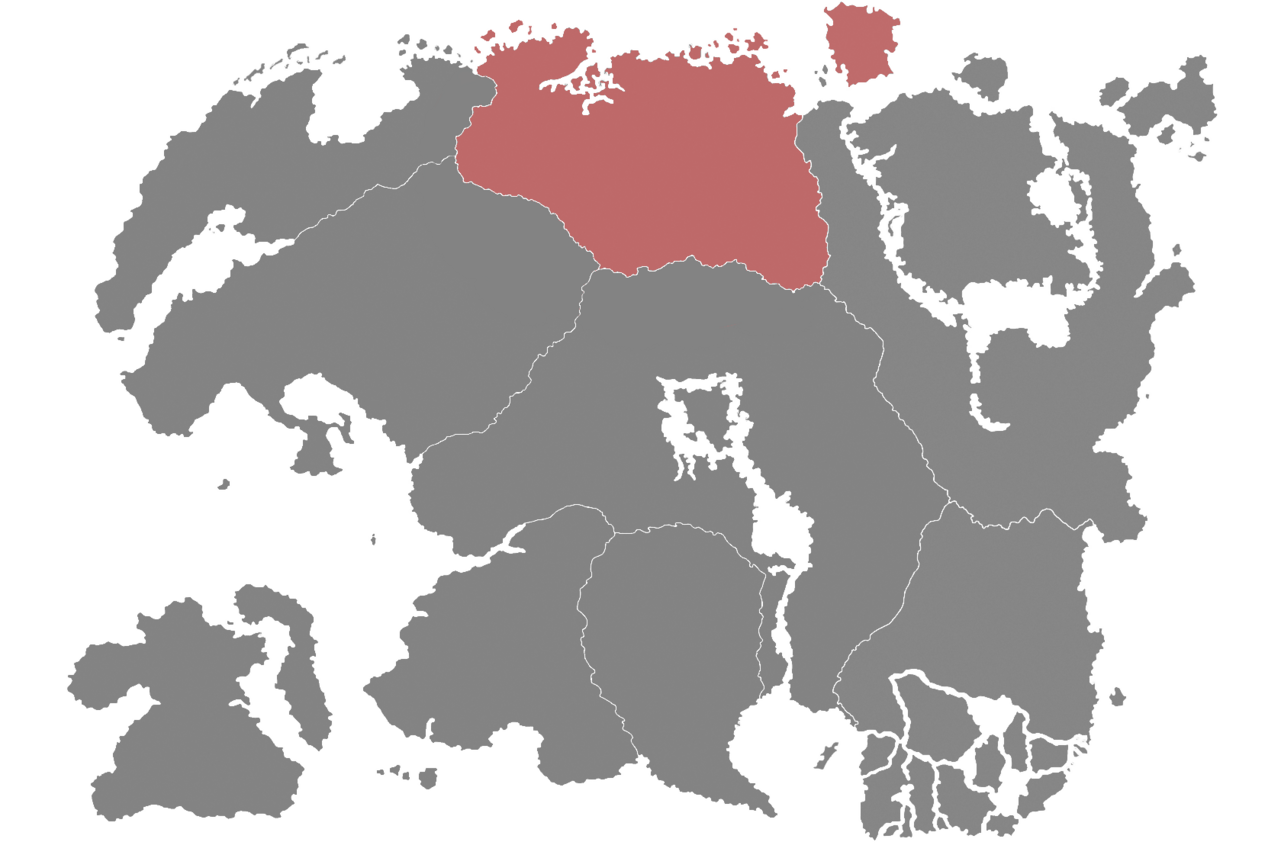
Tamriel stands as the beating heart of Nirn, the central stage where nearly all events in The Elder Scrolls saga unfold. This landmass lies at the core of the Aurbis, serving as a crucible where mortal races clash with divine forces, empires rise and crumble like dust, and reality itself is contested by ancient threats ranging from dragons to Daedric Princes. Divided into nine distinct provinces, each reflecting the unique culture, geography, and spiritual heritage of its dominant inhabitants, Tamriel acts as a living tapestry where history is actively shaped by heroes, villains, and ordinary citizens alike.
- Current Era Context
- Fourth Era (post-Oblivion Crisis and Martin Septim's death in 3E 433)
- Cosmic Significance
- Stage for the Dragon Breaks, the War of the First Council, and the Oblivion Crisis
Lore & Background
History here flows in cycles of ruin and rebirth, marked by the rise and fall of human and meridian empires. Before the current eras, waves of settlers—descendants of the Ehlnofey—established roots that fractured into distinct cultures over millennia. Geography dictates destiny: from the frozen tundras of the north to the sulfurous jungles of the south, the terrain shapes trade, war, and diplomacy. Tamriel remains metaphysically volatile; it is where the veil between Mundus and Oblivion grows dangerously thin, inviting Daedric incursions. The legacy of the Dragonfires once anchored reality against such darkness, a protection that was uniquely maintained at the White-Gold Tower in Cyrodiil through the Amulet of Kings.
In Their Own Story
The wind howled through the jagged peaks of the Jerall Mountains, carrying with it the scent of pine and ancient stone. Below, a lone traveler paused at the edge of a crumbling watchtower, their eyes scanning the horizon where the sun dipped behind the distant silhouette of the Imperial City's White-Gold Tower. Here, in the shadow of giants both past and present, the silence was heavy with the weight of history. Every ruin whispered of fallen legions, every snowdrift hid a forgotten name. The traveler tightened their grip on a rusted blade, knowing that in this land, the past is never truly dead; it merely waits for the next hero, or the next villain, to wake it.
Reader's Guide
Tamriel serves as the foundational setting for the entire Elder Scrolls franchise, anchoring every major narrative arc from the First Era to the Fourth. It is not a static map but a dynamic world where player actions can alter political landscapes, restore ancient magic, or prevent apocalyptic events. The continent's nine provinces offer vastly different gameplay experiences and cultural deep dives, ensuring that no two journeys across its borders feel the same.
Did You Know?
- While often poetically associated with 'Sun's Dawn,' the name 'Tamriel' does not literally mean the place where light first touches the world; geographically, Akavir lies to the east, meaning the sun rises over that cont
- Unlike many fantasy settings with a single unified map, Tamriel's geography has shifted significantly over thousands of years due to magical cataclysms and geological upheaval.
- The continent is surrounded by the Great Ocean, bordered to the north by the frozen lands of Atmora and to the east by the mysterious continent of Akavir.
- The ritual of lighting the Dragonfires was unique to the White-Gold Tower in Cyrodiil; no other location in the Aurbis possessed the power or required components (specifically the Amulet of Kings) to perform this rite.
Origins and Business Evolution
The Elder Scrolls Online marked a pivotal moment as the inaugural project for ZeniMax Online Studios, a subsidiary established in 2007 to expand the franchise into the massively multiplayer online role-playing genre. Following an extensive seven-year development cycle funded by Providence Equity Partners and internal reinvestments, the title launched in April 2014 for PC platforms with a mandatory monthly subscription model. Initial critical reception was mixed, prompting a strategic pivot in March 2015 when the game was rebranded as The Elder Scrolls Online: Tamriel Unlimited. This relaunch transitioned the business model to buy-to-play, introducing microtransactions and an optional subscription while retaining core content access. This shift proved transformative; by 2020, sales surpassed 15 million units, and cumulative revenue exceeded $2 billion by 2024. The game has since expanded across multiple console generations, reaching PlayStation 4 and Xbox One in 2015, followed by next-generation consoles in June 2021, solidifying its status as a financial pillar for Bethesda Softworks.
Narrative Setting and Factions
Set on the continent of Tamriel during the Second Era, approximately a millennium before the events of Skyrim, the game presents a world fractured by dual conflicts. The primary narrative thrust involves the Daedric Prince Molag Bal attempting to merge his realm of Coldharbour with Mundus, having stolen the player's soul and enslaved their husk in the Wailing Prison. Simultaneously, the vacuum left by a fallen Empire has sparked a war for the Ruby Throne among three mortal alliances: the First Aldmeri Dominion led by Queen Ayrenn, the Daggerfall Covenant under High King Emeric, and the Ebonheart Pact commanded by Jorunn Skald-King. While players can join any of these factions to fight for supremacy, the crumbling Empire remains a non-joinable entity ruled by Empress Regent Clivia Tharn. The journey begins in Coldharbour, moves through the Harborage cave system guided by the Prophet, and eventually shifts operations to the Hollow City after retrieving the Amulet of Kings, serving as the launchpad for assaults against Molag Bal's forces.
Character Creation and Progression
The game offers deep customization rooted in Tamriel's diverse biology and culture, allowing players to select from ten distinct races categorized into humans, elves, and bestial groups. While most races are tied to specific factions, the Imperial race is available via purchase or special editions, enabling cross-faction play. Upon choosing a race, characters adopt one of seven classes—Dragonknight, Sorcerer, Nightblade, Templar, Warden, Necromancer, or Arcanist—each providing unique combat abilities and passive effects. Beyond standard attributes, players can embrace supernatural transformations by becoming vampires or werewolves, accessing dedicated skill trees for these states. Recent updates have streamlined this process, removing monetized cures and purchase restrictions to make lycanthropy and vampirism more accessible. Progression is further enriched through seven crafting disciplines, including Alchemy, Blacksmithing, Clothier, Enchanting, Woodworking, Provisioning, and Jewelry Crafting, allowing for extensive gear customization outside of combat.
Gameplay Structure and Future Direction
Unlike single-player entries in the series, this title requires an internet connection but supports solo play through a non-linear design blending quests, random events, and open-world exploration. The game maintains traditional Elder Scrolls perspectives, offering both first- and third-person views while ensuring all zones remain accessible regardless of faction or level. Content delivery has historically relied on annual chapters, but a significant structural change was announced in December 2024 for implementation starting in 2025. This new seasonal content model aims to provide more frequent and consistent updates throughout the year, moving away from the traditional yearly release cadence. While base zones are freely explorable, additional regions often require purchase via the Crown Store or inclusion through the ESO Plus subscription service, creating a tiered access structure for the vast map of Tamriel.
Gallery
Frequently Asked Questions
What is Tamriel?
Tamriel is the primary continent on the planet Nirn where all main Elder Scrolls games take place. It serves as the central stage for mortal history, divided into nine provinces inhabited by various races like humans and mer.
Why is Tamriel important cosmologically?
As the heart of the Aurbis, this landmass acts as a crucible where divine forces and mortal wills constantly interact to shape reality. It is the focal point for major cosmic events like Dragon Breaks that alter time itself across the world.
How many provinces make up Tamriel?
The continent consists of nine distinct regions, each defined by unique geography and the cultural heritage of its dominant people. These areas range from the snowy peaks of Skyrim to the swampy lowlands of Black Marsh.
What era is Tamriel currently in?
The continent exists within the Fourth Era, which began following the death of Emperor Martin Septim and the resolution of the Oblivion Crisis. This timeline marks a period where the Septim dynasty has fallen and new political powers are emerging.
What kinds of conflicts happen on Tamriel?
The land is frequently contested by ancient threats such as dragons, Daedric Princes, and mortal empires vying for control. History here is actively written through wars, magical disasters, and the actions of legendary heroes known as Dragonborns.